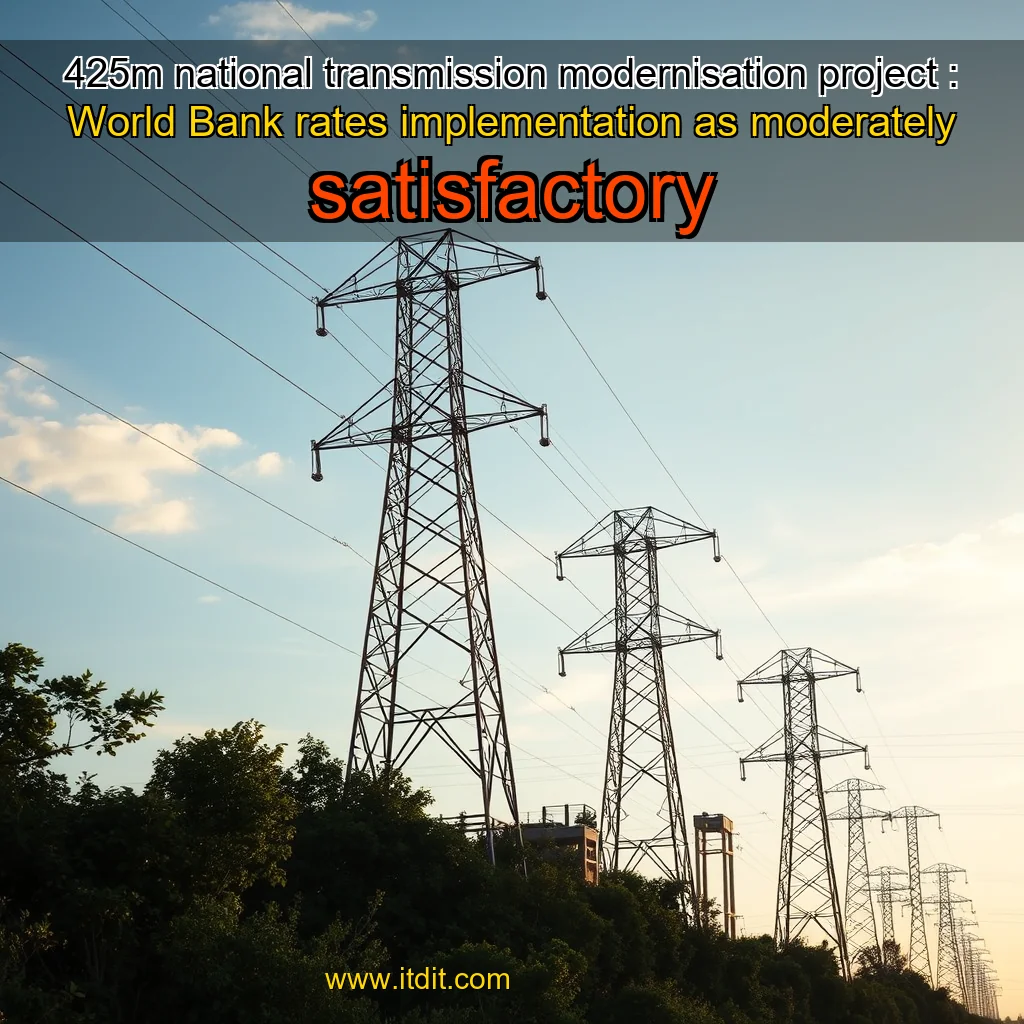
The project aims to improve the transmission infrastructure in the country, which is one of the most critical components of the power sector. The project is being implemented by the Ministry of Energy, Water and Power Development.
The Project Overview
The National Transmission Modernization Project is a significant initiative aimed at upgrading the country’s transmission infrastructure. The project’s primary objective is to enhance the efficiency and reliability of the power transmission system, thereby improving the overall quality of electricity supply to the end-users. The project’s scope includes the modernization of existing transmission lines, substations, and other supporting infrastructure.
Key Objectives
The Implementation Status
The project has made significant progress in its implementation. The World Bank has rated the implementation as moderately satisfactory, indicating that while there have been some challenges, the project is generally on track. The bank has disbursed $160.37 million, which is approximately 37.73 percent of the total project cost. However, there are still some outstanding issues that need to be addressed.
Disbursement Status
Challenges and Opportunities
The National Transmission Modernization Project faces several challenges, including:
Project Background
The NTM-I project, a $425 million World Bank-financed initiative, aims to improve the lives of rural communities in Nepal. The project, which began in 2017, focuses on enhancing the country’s rural infrastructure, promoting economic growth, and improving access to basic services such as healthcare, education, and sanitation.
Key Components
The first group consists of the expansion of the transmission lines and the second group consists of the up gradation of the transmission towers.
Transmission Network Expansion and Upgradation
The transmission network expansion and upgradation component is a critical part of the project. This component aims to enhance the capacity of the existing transmission network, ensuring that it can handle the increasing demand for electricity.
The NTDC will also finance the second stage of the ERP programme, which includes the implementation of a new HRM system and the integration of the HRM system with the existing ERP system.
The National Technology Development Corporation (NTDC) has embarked on a journey to modernize its operations through the implementation of an Enterprise Resource Planning (ERP) system. ### The Need for Modernization
The NTDC’s current ICT infrastructure is outdated, and the organization is facing several challenges in managing its resources effectively. The lack of a unified system for managing various aspects of the organization’s operations has resulted in inefficiencies and duplication of efforts. The NTDC recognizes the need for a modernized system that can integrate all its operations and provide real-time information to support informed decision-making.
The ERP Programme
The NTDC has decided to implement an ERP system to address its operational challenges. The ERP programme will consist of two stages. The first stage will focus on modernizing the ICT infrastructure and developing and deploying the ERP system. The NTDC will finance the first stage of the ERP programme.
Key Components of the First Stage
Benefits of the First Stage
The NTDC will finance the first stage of the ERP programme, which includes the modernization of the ICT infrastructure and the development and deployment of the ERP system.
The Second Stage of the ERP Programme
The second stage of the ERP programme will focus on implementing a new Human Resource Management (HRM) system and integrating it with the existing ERP system.
World Bank and NTDC Partner to Drive Sustainable Development in Pakistan.
Collaboration and Partnerships
The World Bank and the National Technical Development Corporation (NTDC) have announced a new partnership to tackle some of the most pressing challenges facing Pakistan.

news is a contributor at itdit. We are committed to providing well-researched, accurate, and valuable content to our readers.