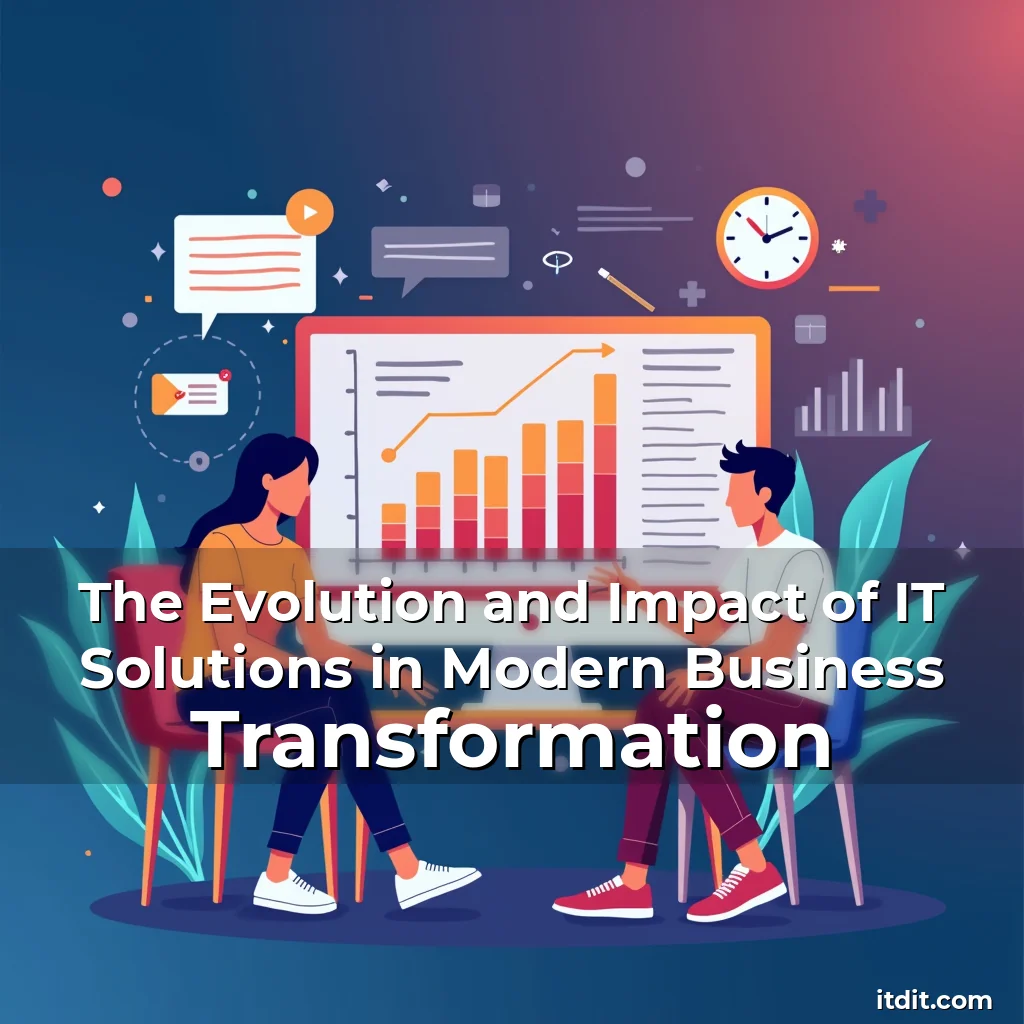
The Evolution and Impact of IT Solutions in Modern Business Transformation
In today’s hyper-connected digital landscape, IT solutions have become the backbone of business operations across industries. From streamlining workflows to enhancing customer experiences, these technologies are reshaping how organizations function.
As companies navigate rapid technological advancements, understanding the role of IT solutions is crucial for staying competitive. This article explores their evolution, key components, benefits, challenges, and future trends.
The Historical Journey of IT Solutions
The roots of modern IT solutions trace back to the mid-20th century when computers were first introduced for complex calculations. These early systems laid the foundation for automation and data processing.
By the 1980s, personal computers revolutionized access to information technology, making it possible for businesses to manage tasks more efficiently than ever before. The internet further transformed communication and collaboration methods globally.
With the emergence of cloud computing in the late 2000s, organizations could store and process vast amounts of data without maintaining physical infrastructure. This shift marked a pivotal moment in scalable and flexible IT strategies.
Todays AI-driven platforms offer predictive analytics and intelligent decision-making capabilities that weren’t conceivable decades ago. They enable real-time adjustments based on dynamic market conditions and user behaviors.
- Data Centralization: Early computer systems allowed centralized storage of critical organizational data, reducing redundancy and improving accessibility.
- Automation Advancements: As programming languages evolved, so did automation tools capable of handling repetitive tasks more accurately and quickly than manual labor.
Core Components Driving Effective IT Solutions
A robust IT solution typically comprises several interconnected elements working together seamlessly. Hardware forms the physical foundation upon which software operates effectively.
Software applications provide functionalities tailored specifically towards achieving defined objectives within an organization’s workflow processes. Networking infrastructure ensures secure transmission between devices both locally and remotely.
Cybersecurity measures protect sensitive information from unauthorized access while ensuring compliance with regulatory standards relevant to each industry sector.
User training programs ensure employees can leverage available resources optimally, minimizing potential errors caused by unfamiliarity with new technologies.
Continuous maintenance routines help identify vulnerabilities proactively through regular audits and updates aimed at preserving system integrity over time periods ranging from months up to years depending on usage frequency levels.
Broad Applications Across Industries
Healthcare facilities utilize specialized electronic health record (EHR) systems designed primarily around patient care delivery frameworks involving diagnosis support mechanisms as well as treatment monitoring protocols.
Educational institutions implement learning management systems (LMS) that facilitate remote teaching environments alongside interactive course materials accessible anytime anywhere via mobile or desktop interfaces.
Retail sectors benefit significantly from inventory control softwares integrated directly into Point Of Sale terminals enabling accurate stock tracking coupled with sales performance analysis features useful during seasonal promotions or product launches.
Manufacturing plants rely heavily on Industrial Internet Of Things (IIoT) connected machinery setups allowing predictive maintenance scheduling thus preventing unexpected downtime events leading towards loss revenues scenarios.
Differentiating Factors Among Industry-Specific Implementations
While core principles remain consistent across various domains, customization efforts often vary considerably according to specific operational needs inherent within particular vertical markets.
Hospitals may prioritize HIPAA compliant EHR implementations focusing strictly onto medical records confidentiality aspects whereas schools might emphasize LMS scalability requirements accommodating growing student populations dynamically.
Automotive factories require IIoT sensors embedded within assembly lines continuously transmitting status reports regarding machine health indicators thereby predicting breakdown probabilities ahead-of-time accurately enough to schedule repairs preemptively rather than reactively after failures occur.
This level of granularity highlights why selecting appropriate vendors becomes essential since they must understand nuanced differences among different business models otherwise risk delivering suboptimal outcomes despite technically sound offerings initially perceived beneficially but ultimately failing practically due lack alignment with actual end-user expectations.
Advantages Offered By Contemporary IT Solution Frameworks
Implementing advanced IT solutions brings numerous advantages including enhanced productivity rates achieved through automated task execution eliminating human error prone activities traditionally associated with manual interventions.
Faster decision making cycles emerge naturally because data driven insights generated instantaneously allow leaders to respond swiftly even amidst volatile external factors impacting day-to-day functioning adversely otherwise would be difficult mitigate without timely intervention measures implemented correctly beforehand.
Improved customer satisfaction scores result directly from personalized service interactions enabled by CRM technologies capturing behavioral patterns exhibited consistently over extended durations facilitating targeted marketing campaigns increasing conversion rates appreciably compared traditional approaches relying solely demographic segmentation techniques alone.
Cost reduction opportunities manifest themselves visibly particularly noticeable areas such as reduced paper consumption costs attributable elimination printouts previously necessary prior digitization initiatives undertaken successfully leveraging latest scanning OCR technologies combined cloud storage capacities sufficient holding massive volumes securely protected against breaches attempted frequently nowadays cybercriminal entities constantly probing weaknesses exploit profit motives behind stealing confidential corporate assets worth millions potentially damaging reputations irreparably unless safeguarded adequately using state-of-the-art encryption methodologies employed widely nowdays amongst top tier enterprises globally.
Potential Challenges Faced During Implementation Phases
Despite clear-cut benefits promised upfront projections sometimes fail materialize fully once implementation commences owing multifaceted nature involved transforming legacy infrastructures gradually integrating newer paradigms incrementally instead abrupt transitions causing disruption likely resistance encountered amongst staff accustomed old ways operating procedures requiring retraining sessions consuming additional budget allocations beyond initial estimates projected originally.
Data migration complexities pose significant hurdles especially migrating databases containing historical transaction logs needing meticulous mapping ensuring nothing gets lost along transition phases preferably utilizing ETL (Extract Transform Load) processes carefully monitored closely throughout entire duration until final validation steps confirmed successful transfer completed accurately matching source documents precisely down last decimal place figures maintained faithfully without corruption incidents occurring inadvertently due oversight mistakes made haste rushing completion targets set arbitrarily unrealistic timelines forcing compromises quality standards expected ideally maintained consistently regardless circumstances faced during project lifecycles.
Vendor lock-in situations arise commonly whenever proprietary formats used exclusively certain platforms restricting interoperability possibilities hindering seamless integration attempts third party services preferring open-source alternatives offering greater flexibility adaptability needed evolving tech landscapes where innovation happens rapidly necessitating continuous updates upgrades keeping pace changing demands consumers dictate market forces shaping future directions development trajectories accordingly.
Security risks increase exponentially proportionate scale deployed solutions expanding attack surfaces exposed attackers seeking exploits vulnerabilities poorly configured settings mismanaged permissions granting excessive privileges unnecessarily posing serious threats compromise integrity confidentiality availability triad fundamental pillars cybersecurity resilience framework established universally accepted best practices followed rigorously prevent catastrophic data leaks financial losses legal repercussions stemming negligence adhering minimum compliance benchmarks merely insufficient given sophistication adversaries persistently advancing techniques circumvent defenses erected naively assumed impenetrable absent thorough penetration testing simulated breach exercises conducted regularly assessing weaknesses identifying remediation actions prioritizing most critical issues addressed urgently before escalation causes irreparable damage.
Future Trends Shaping Next Generation IT Solutions
Artificial intelligence stands poised to redefine what constitutes typical enterprise resource planning (ERP) systems incorporating self-learning algorithms capable adjusting parameters automatically optimizing internal logistics supply chains dynamically adapting fluctuating demand forecasts generated sophisticated machine learning models trained extensively diverse datasets spanning geographic regions cultures economic indicators influencing purchasing behavior differently varying locations demographics age groups income brackets etcetera.
Quantum computing promises revolutionary breakthroughs particularly cryptography fields enabling unbreakable codes theoretically impossible decipher without possessing quantum processor itself opening entirely new frontiers securing communications private transactions governmental secrets military classified operations guarded fiercely national security interests paramount importance cannot overstated sufficiently emphasized enough times already yet still remains highly speculative territory awaiting practical realization commercial deployment timelines uncertain though optimistic predictions circulated academic circles suggesting imminent arrival horizon maybe five ten years perhaps longer depending funding research milestones achieved breakthrough discoveries validated peer review publications published journals respected scientific communities acknowledging legitimacy claims substantiated empirical evidence gathered rigorous experiments repeated verifiable results obtained reliably consistently replicated independently other labs confirming authenticity findings initially reported original sources.
Edge computing will play increasingly vital roles decentralizing computational loads closer device endpoints minimizing latency delays experienced transmitting huge volumes raw sensor collected information central servers located distant geographical locations resulting slower response times unsuitable real-time applications demanding immediate action responses such autonomous vehicles reliant split-second decisions avoiding collisions pedestrians cyclists fellow drivers alike;
Additionally, augmented reality (AR) technologies will merge virtual overlays onto physical realities creating immersive workspaces where engineers visualize complex machinery schematics interact three-dimensional blueprints modifying designs digitally before fabrication begins saving substantial manufacturing costs waste materials discarded prototyping stages traditionally required physically building prototypes expensive consume considerable resources time waiting approval cycles lengthy bureaucratic approvals needed prior commencement actual construction works commenced.
Evaluating ROI And Strategic Alignment With Organizational Goals
To determine whether investing in particular IT solution aligns strategic vision long-term aspirations requires careful evaluation return investments anticipated versus capital expenditures incurred acquiring implementing maintaining upgrading decommissioning lifecycle management considerations factored holistically rather cherry-picking isolated metrics misleading assessments skewed perspectives inaccurate conclusions drawn hasty judgments devoid contextual awareness necessary making informed choices beneficial sustainable growth trajectories forward-looking enterprises pursuing excellence benchmarks surpassing mere survival thresholds aiming thrive flourish amidst fierce competition intensifying daily.
Conducting cost-benefit analyses involves quantifying tangible intangible values derived adoption new technologies weighing against direct indirect expenses related procurement licensing installation configuration customizations training documentation ongoing support troubleshooting resolving technical glitches arising inevitably post-deployment phases unpredictable occurrences challenging anticipate accurately though mitigation plans prepared mitigating impact minimized efficiently handled promptly preventing escalations escalate severity levels requiring emergency interventions diverting attention away primary operational duties disrupting normalcy operations temporarily until restored properly.
Aligning IT initiatives with broader company objectives ensures every dollar spent contributes meaningfully toward overarching mission statements translating abstract goals concrete deliverables measurable KPIs tracked periodically reviewed adjusted strategically ensuring continued relevance effectiveness amidst shifting priorities emerging opportunities threatening disruptive innovations possibly rendering current investments obsolete prematurely unless refreshed periodically updated continually aligned prevailing technological evolutions industry standards regulations governing ethical usage data privacy protections mandated jurisdictions operating within.
Moreover, stakeholder engagement proves instrumental success journeys gathering feedback preferences expectations ensuring proposed solutions resonate deeply across departments functions levels hierarchy fostering collective ownership shared responsibility cultivating culture embracing change welcoming improvements enhancements viewed positives rather negatives feared resisted passively.
Conclusion
IT solutions continue to evolve rapidly, driving innovation and efficiency across all sectors of society. Their ability to adapt to new challenges makes them indispensable in today’s fast-paced world.
Organizations that embrace these technologies strategically position themselves for sustained growth and competitiveness. Continuous investment in updating and refining IT solutions ensures long-term success and relevance in an ever-changing digital ecosystem.